Panel & Joinery Production spoke with Andy Sutton, Chief Operations Director, and Gail Alcock, Head of Sales at Merinolam UK, to understand how the business is positioning itself within the UK’s competitive decorative surfaces market.
Since entering the UK market six years ago, Merinolam has focused on delivering a streamlined, customer-led proposition built around premium high-pressure laminates (HPL), compact laminate and melamine-faced chipboard (MFC). The company’s approach centres on providing a carefully curated range that reflects the most in-demand décors and finishes for both commercial and residential applications, while ensuring consistent availability – an area where the market has struggled since 2024 following changes in laminate distribution.
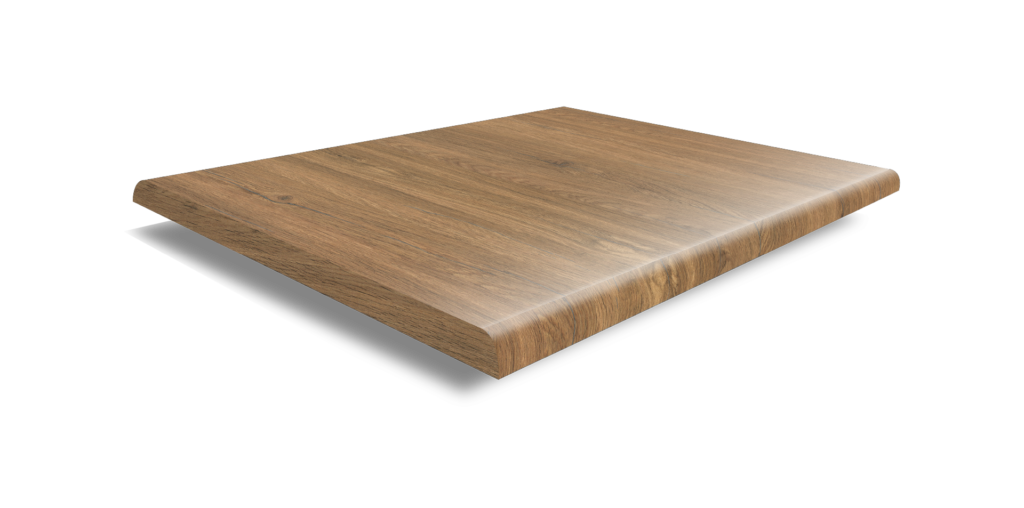
A key part of this strategy has been Merinolam’s exclusive distribution partnership with James Latham. By aligning product development with Latham’s established service infrastructure, the business has been able to create a dependable supply model, with all core ranges stocked across 12 depots nationwide. This addresses a long-standing challenge in the sector, where direct-to-market supply from European manufacturers can often result in inconsistent availability and extended lead times. For fabricators and joinery manufacturers, the ability to access in stock material quickly and reliably has effectively reset expectations around service levels.
Merinolam’s UK strategy has been shaped by Andy and Gail, who have decades of industry experience between them, combined with detailed market research. With over 25 years of sector knowledge informing decision-making, the company has deliberately returned to what it sees as proven best practice: offering the right products, in the right finishes, backed by strong availability and technical support. This customer-centric approach is not simply a slogan but underpins product selection, stock profiling and ongoing range development.

The business itself forms part of the wider Merino Group, a family-owned manufacturer established in 1965. Originally focused on plywood production, the Group has grown into one of the world’s largest producers of decorative laminates and compact surfaces, exporting to more than 80 countries.
Significant investment in manufacturing technology and research and development has enabled the Group to expand into a range of sectors, including interior architectural products and beyond. Merinolam represents the premium surface solutions arm of this global operation, bringing those capabilities directly to the UK market.
From a product perspective, Merinolam’s offering is designed with fabrication and performance in mind. The range is widely used in applications such as washroom cubicles, fire doors, interior wall panelling and high-traffic environments across healthcare, education, retail and hospitality.
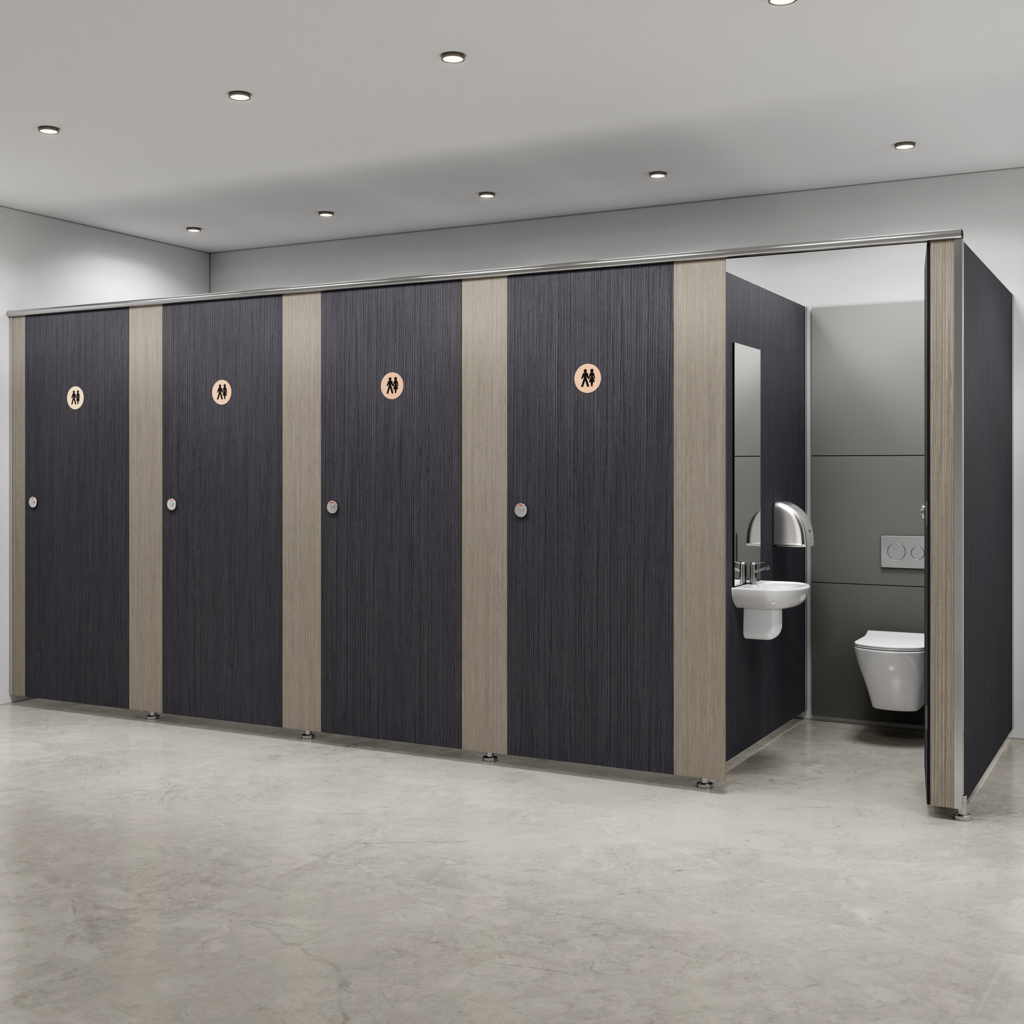
Durability, consistency of finish and ease of machining are all central to the specification, ensuring materials perform reliably throughout their lifecycle.
One of the defining characteristics of the range is its consistency across product types. Matching décors are available in HPL, compact and MFC, allowing manufacturers and designers to achieve a cohesive finish across different applications within a project. This complementary approach simplifies specification and supports more efficient production processes within joinery workshops.
Merinolam has also built differentiation through a number of technical and design-led features. The core UK range includes fire-retardant properties as standard, without additional cost, helping fabricators meet regulatory requirements more easily. Synchronised woodgrain textures offer a close visual and tactile replication of natural veneer, while being supplied in formats that are more practical for manufacturing. In addition, the company offers a suite of specialist laminates, including anti-fingerprint surfaces, electrostatic discharge (ESD) laminates, magnetic dry-wipe boards and solid colour-through options.
Sustainability is another area of focus, embedded within the wider Merino Group’s operations. The company highlights its progress in reducing carbon emissions, achieving water neutrality and increasing its reliance on renewable energy sources, including biomass, solar and bio-methane. These environmental credentials are increasingly relevant to UK specifiers and manufacturers, particularly as demand grows for materials that align with sustainable building standards and responsible sourcing practices.
Looking ahead, Merinolam’s priorities for 2026 centre on strengthening its presence within the UK market and deepening engagement with fabricators, designers and OEMs. Continued investment in décor development will see new textures and finishes introduced in line with evolving design trends, alongside targeted collections for specific sectors such as doors, washrooms and interior fit-outs.
The company also plans to build on its sustainability messaging, ensuring that environmental performance and lifecycle considerations are clearly communicated and supported by appropriate documentation, including Environmental Product Declarations. This reflects a broader shift within the woodworking and joinery sectors, where material selection is increasingly influenced by both design and environmental criteria.
At the core of Merinolam’s growth strategy remains its partnership-led model. By working closely with James Latham, the company is able to combine global manufacturing strength with local distribution expertise, technical support and market insight. This collaborative approach ensures that products are not only available but also supported by the knowledge and service levels required by modern joinery manufacturers.
As the UK market continues to demand higher standards in both product performance and supply reliability, Merinolam’s emphasis on availability, consistency and customer focus positions it as a strong contender within the decorative surfaces sector. The combination of heritage, innovation and a service-driven distribution model provides a solid platform for sustained growth in the years ahead.